A practical audit sequence for buyers who want to test machine, sample, capacity and QC claims before committing to sampling or bulk production.
Use original evidence wherever possible: machine fronts, readable model or specification plates, workshop rows, real garment samples, measurements, finishing and packing records. Cropping, privacy masking and brightness correction may be acceptable; generative cleanup should not be treated as core factory evidence.
Published 19 July 2026 · Factory facts checked 19 July 2026
Gauge and model-plate evidenceCapacity checked against order mixQC and packing proof requested
Audit sequence
Seven Checks Before You Approve A Factory
Run the checks in order. Each one should produce evidence that can be matched to the next stage instead of relying on a single workshop photo or capacity claim.
01Confirm that the machine gauge is visibly marked as 18G
02Match the machine model, specification plate and claimed machine count
03Reconcile capacity with equipment scale and the planned order mix
04Inspect real garments for weight, neckline, cuff, hem and stitch quality
05Confirm the information required before sampling starts
06Request QC, finishing and packing evidence
07Stop and investigate exaggerated or internally inconsistent claims
Check 01-02
Confirm Gauge, Model And Equipment Identity
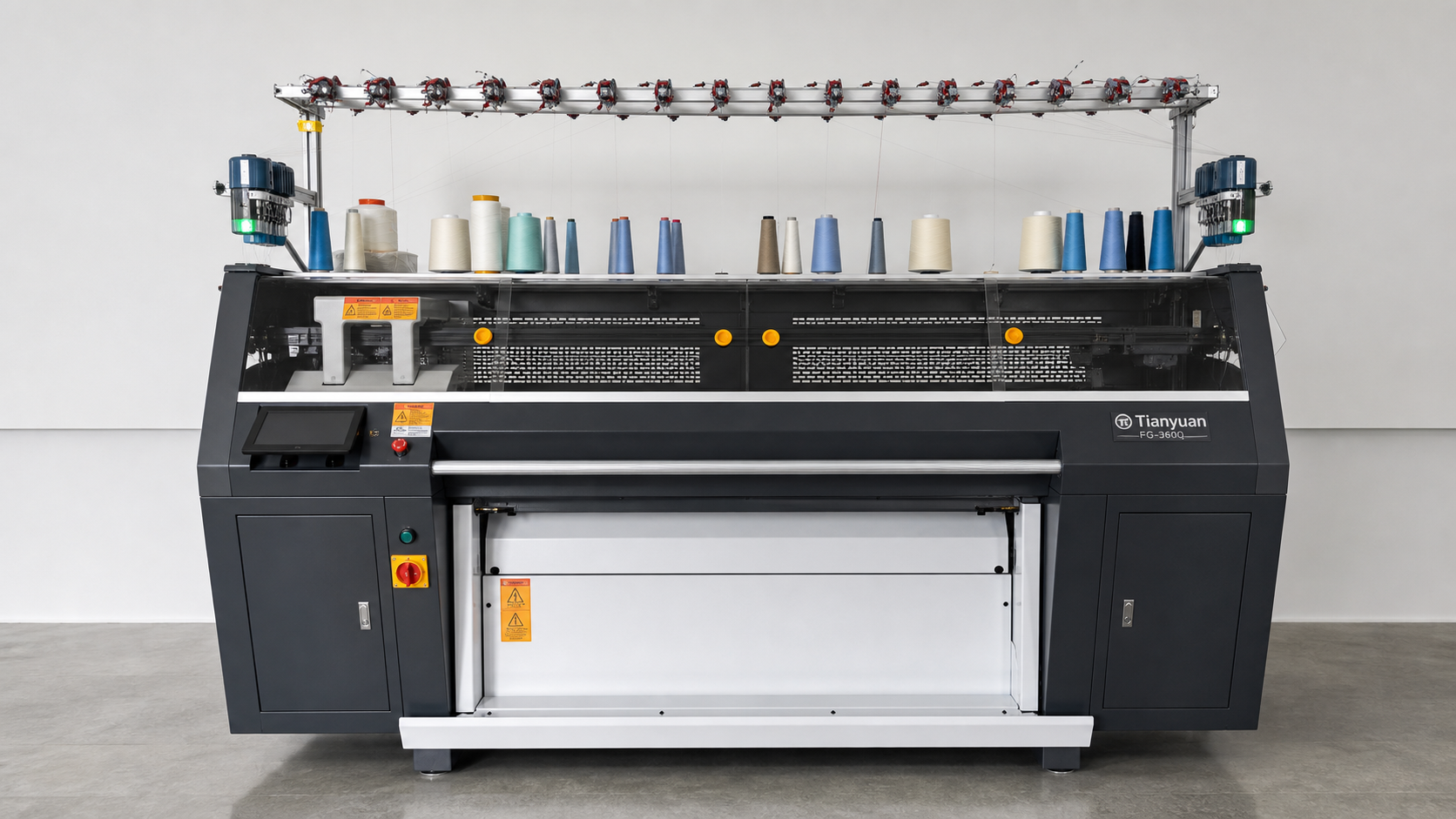
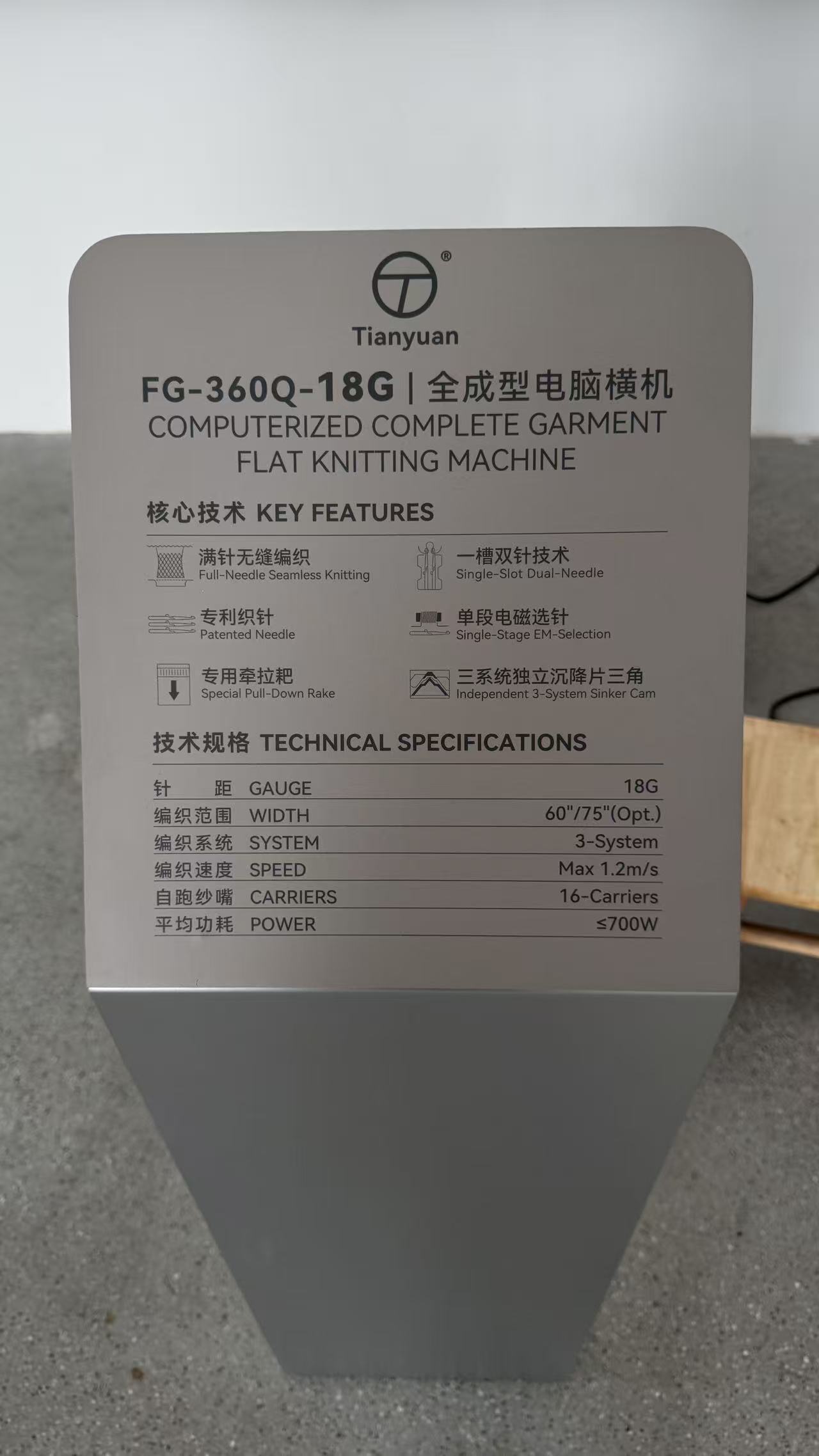
The clean front view below helps identify the machine body. For verification, ask for an uncropped machine-front photo and a separate readable specification or model-plate photo from the same equipment reference. On the Tianyuan example shown here, the board states FG-360Q-18G and lists the gauge as 18G.
Read the complete model name rather than accepting an 18G claim in a caption.
Check that the machine body, brand and model reference are consistent across photos or a live video call.
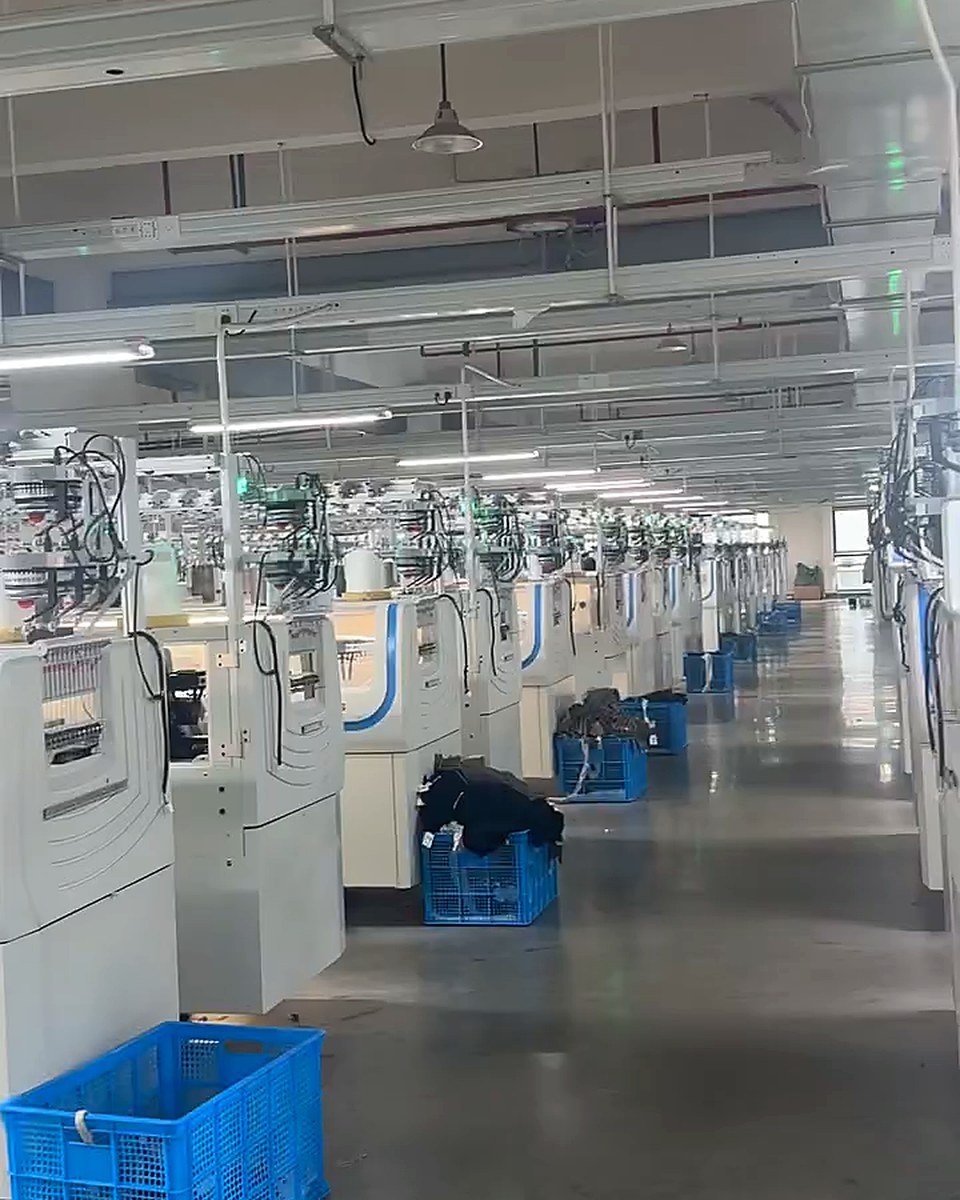
For machine-count claims, request wide workshop rows and a simple count by brand and gauge.
Ask separately for the Cixing model plate when that model detail becomes available.
These references serve different purposes: the clean machine-front view identifies the equipment, the readable board confirms the 18G model, and the workshop view provides scale context. For a formal audit, request uncropped originals or a live video walkthrough.
Tianyuan machine front viewReadable model and gauge boardWorkshop scale context
Check 03
Test Whether Capacity Matches The Equipment And Order Mix
A capacity number is only useful when the factory explains the assumptions behind it. Compare the claimed machine base with product complexity, machine time, yarn readiness, color changes, sizes, sampling load, finishing and expected delivery window.
Published machine base
210 sets of 18G seamless knitting machines: 90 Tianyuan and 120 Cixing
Published capacity
Around 500,000 pcs annually and around 40,000 pcs monthly on average
Buyer cross-check
Ask how many machines can run the exact style, expected output per machine, current loading and allowance for sampling, finishing and rework
Order-specific check
Confirm yarn availability, number of colors, size split, style complexity, label and packing work, approved sample date and shipment window
Check 04
Use Real Garments To Test Fine-Gauge Capability
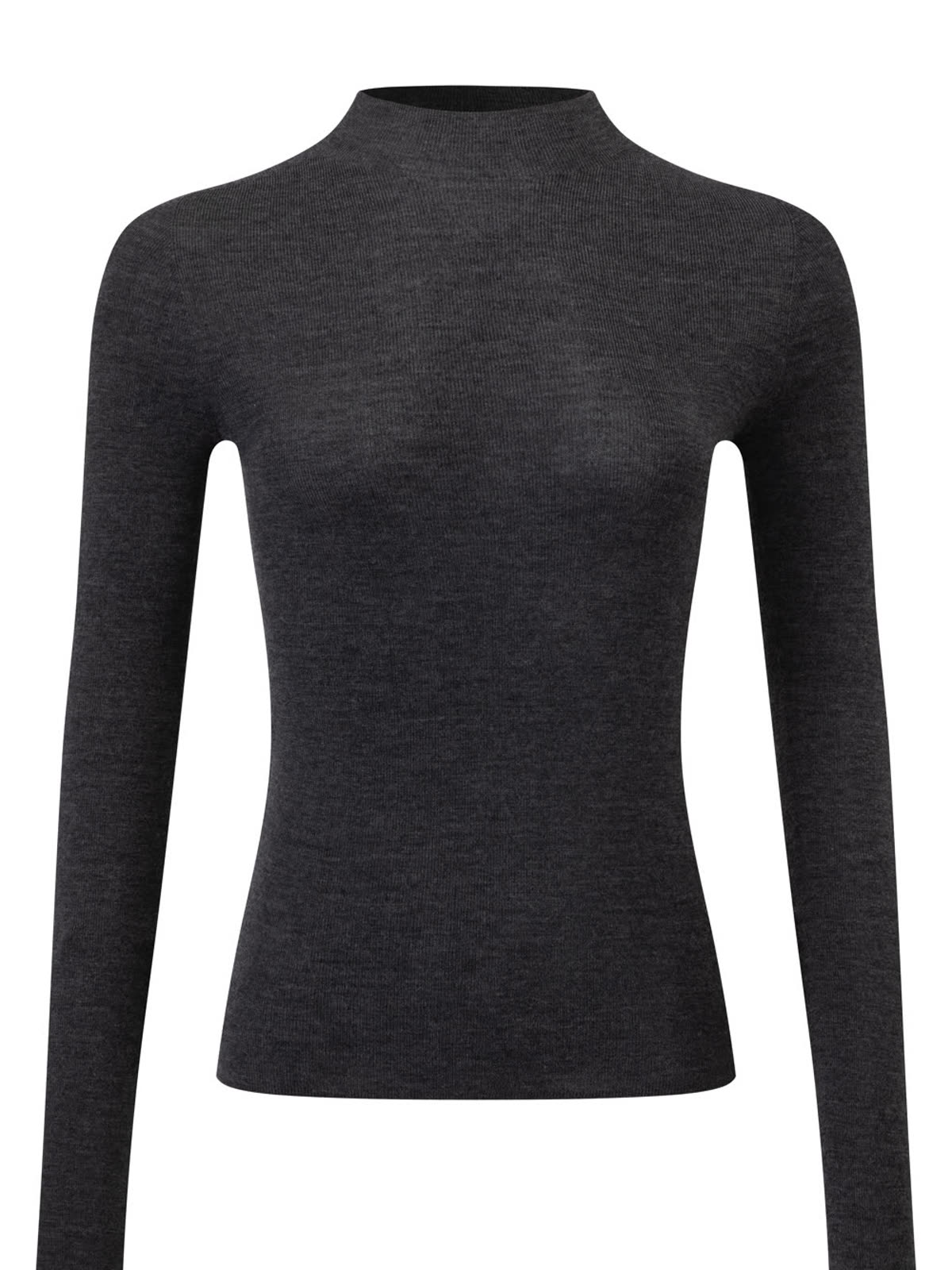
A finished sample should connect the machine claim to buyer-visible workmanship. Review the garment on a flat surface and in hand, then compare it with the approved measurements and weight reference.
Record garment weight by size; current sample references are S 138g, M 148g and L 152g.
Inspect neckline shape, edge stability and recovery after light stretch.
Check cuffs and hem for even tension, symmetry and clean transitions.
Review stitch paths, surface consistency, holes, loose yarns, oil marks and visible repair points.
Before sampling, require a written summary of the inputs and evidence that will control the approved sample, bulk production, QC, finishing and packing.
Before sampling
Tech pack or reference photo, target yarn and hand feel, measurements, sizes, garment weight direction, colors, quantity, label files, packing requirement and target date
Sample confirmation
Measurements, fit, yarn, color, construction, neckline, cuff, hem, label position, garment weight and packing direction
QC proof
First-piece result, measurement records, visible defect checks, in-process review and final inspection summary
Finishing proof
Thread trimming, steaming or pressing, garment shape, surface cleanliness and label placement
Packing proof
Size and care labels, hangtag, barcode if required, polybag, carton mark, quantity per carton and shipment marks
Check 07
Separate Useful Evidence From Risk Signals
Good Fit
Projects We Can Support Carefully
Original machine and model-plate photos can be matched by brand, model and gauge.
Machine counts are split by brand and can be supported by workshop views or a live count.
Capacity is explained against style, machine loading, yarn, finishing and delivery timing.
Real samples include weights, measurements and close details of neckline, cuff, hem and stitch surface.
QC, finishing and packing requirements are confirmed before bulk production.
Confirm First
Projects That Need Extra Review
Only heavily edited or generated workshop images are offered as proof.
The model or gauge mark cannot be shown clearly.
Machine counts or capacity change between messages without an operational explanation.
The factory promises every certification, yarn, MOQ or lead time before reviewing the style.
Customer logos, ratings or famous-brand claims replace direct production evidence.
Next step
Send One Product And One Evidence Request
This guide and the linked company record were checked on 19 July 2026. A useful first request combines one target style with quantity, yarn, colors and the machine, sample or QC evidence you want reviewed.